
Multispeciality hospital in Mumbai have almost become the first choice of families dealing with everything from the most routine health worries to intricate medical needs. A clear understanding of the workings of these hospitals will help you appreciate the reasons for their popularity.
At Ashirwad Critical Care Unit and Multispeciality Hospital, we see the same trend of patients’ preference towards multispeciality hospitals. The preference is beyond the fact that patients get almost all medical services needed under one roof.
What Is a Multispeciality Hospital?
As the name reveals, multispecialty hospitals are those that have multiple medical specialities under a single hospital. Instead of visiting multiple hospitals for multiple health issues, patients are now able to visit a single hospital for services that include the following:
- Cardiology
- Orthopedics
- Gynecology
- General surgery
- Internal medicine
- Imaging and Diagnostics
This all-in-one service model is one of the main reasons for the popularity of a multispeciality hospital in Mumbai in the last decade.
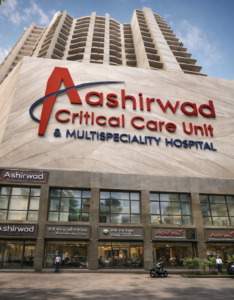
Why Patients Prefer a Multispeciality Hospital in Mumbai
We are all aware that Mumbai is a fast-moving city and is one of the most densely populated cities in the world. Because of this, it doesn’t make sense to have multiple clinic appointments. This is one of the key reasons that multispeciality hospital in Mumbai get more and more patients every year.
Here are a few patient desires met by Multispeciality Hospitals in Mumbai:
- Direct specialist-to-specialist contact = speedy diagnosis
- No retesting when moving between specialties
- Streamlined system = unified billing, records, and follow-ups
- Multispecialty hospitals help patients feel supported.
If patients develop other conditions or complications, the hospital has readily available help.
Conditions Treated
Referrals to other hospitals are kept to a minimum in multispecialty hospitals in Mumbai. Because of this, patients are offered numerous treatment options. Cardio and bone health conditions are some of the most common conditions treated. Women’s health and surgical needs are also treated. Other needs, like concerns for your GI tract and diabetes, and more, are also covered.
Benefits of Having Multiple Departments Under One Roof
Multispeciality hospital in Mumbai offers things single-speciality clinics do not. For patients, this means:
- Care is well managed. Complex cases are no problem because of the collaboration that takes place across departments.
- There is an obvious time savings. No time wasted travelling to and from a multispeciality hospital in Mumbai for tests, follow-ups, and appointments.
- Back-and-forth shuttling isn’t necessary, keeping your full medical history in one place.
- A multi-speciality hospital helps families feel at ease, knowing that family members with multiple care needs can be treated.
Advanced Technology, Better Treatment Outcomes
Even the most complex cases help build the most trusted hospital. For this reason, technology is a huge factor at the hospital.
Modern healthcare involves the following:
- Digitised fast-tracked imaging and diagnostics.
- Surgical options with minor invasions.
- System-wide electronic health records.
- ICU and monitoring equipment.
Technological advancements in healthcare facilitate faster detection, more precise treatment, and shorter hospital stays.
Emergency and Critical Care Support
When something goes wrong, perhaps one of the most important factors is having a well-equipped emergency department close by.
Most multispecialty hospitals are built to handle the following:
- Fully staffed and equipped emergency response, ICU, and trauma care units.
- Critical care teams of fully staffed and equipped specialists.
- Emergency transport and trauma response systems.
This state of readiness plays a big part in determining which facility a family chooses to get care from.

Factors You Can Count on from Multispeciality Hospital in Mumbai
Time is the biggest factor in cardiac emergencies, and multispeciality hospitals in Mumbai make that clear.
Here are a few more aspects of cardiac care that are all located in the same place:
- Patients can receive an ECG and cardiac enzyme tests upon arrival
- There’s a cath lab ready to perform an emergency angioplasty if needed
- There’s immediate interaction between cardiology, emergency, and diagnostic services
- There are cardiologists on site 24/7 in case of a time-sensitive situation
- The above factors lead to speedier resolutions for the possibility of a heart attack and its complications
Why People Choose Ashirwad Critical Care Unit and Multispeciality Hospital
At Ashirwad Critical Care Unit and Multispeciality Hospital, we’ve built our reputation around exactly what makes multispeciality hospitals in Mumbai valuable in the first place: coordinated, accessible, and compassionate care.
We meet our patients’ needs with the following:
- Specialist teams in all major disciplines.
- Modern, less invasive surgery and diagnostic technology.
- A dedicated emergency and critical care unit.
- A dedicated patient care focus.
Frequently Asked Questions
1. Are Multispeciality Hospitals in Mumbai More Expensive than Smaller Clinics?
Not in all cases. While there are definitely cases where the cost of care is higher, the convenience of having all the care offered on-site and eliminating the need for redundant testing actually saves money in the long run in most cases.
2. Do multispeciality hospitals manage medical emergencies?
Yes, most multispecialty hospitals have emergency departments and staff specialists round-the-clock.
3. How do you choose the right multispeciality hospital for your family?
You need to look at the range of departments, the technology, and most importantly, reviews of other patients.
Final Thoughts
Selecting the appropriate hospital for your health needs is a major priority for families. This is why multispeciality hospitals in Mumbai are so popular. Everything is streamlined in multispecialty hospital departments. Ashirwad Critical Care Unit and Multispecialty Hospital provides coordinated departments so patients receive the best care as efficiently as possible.